
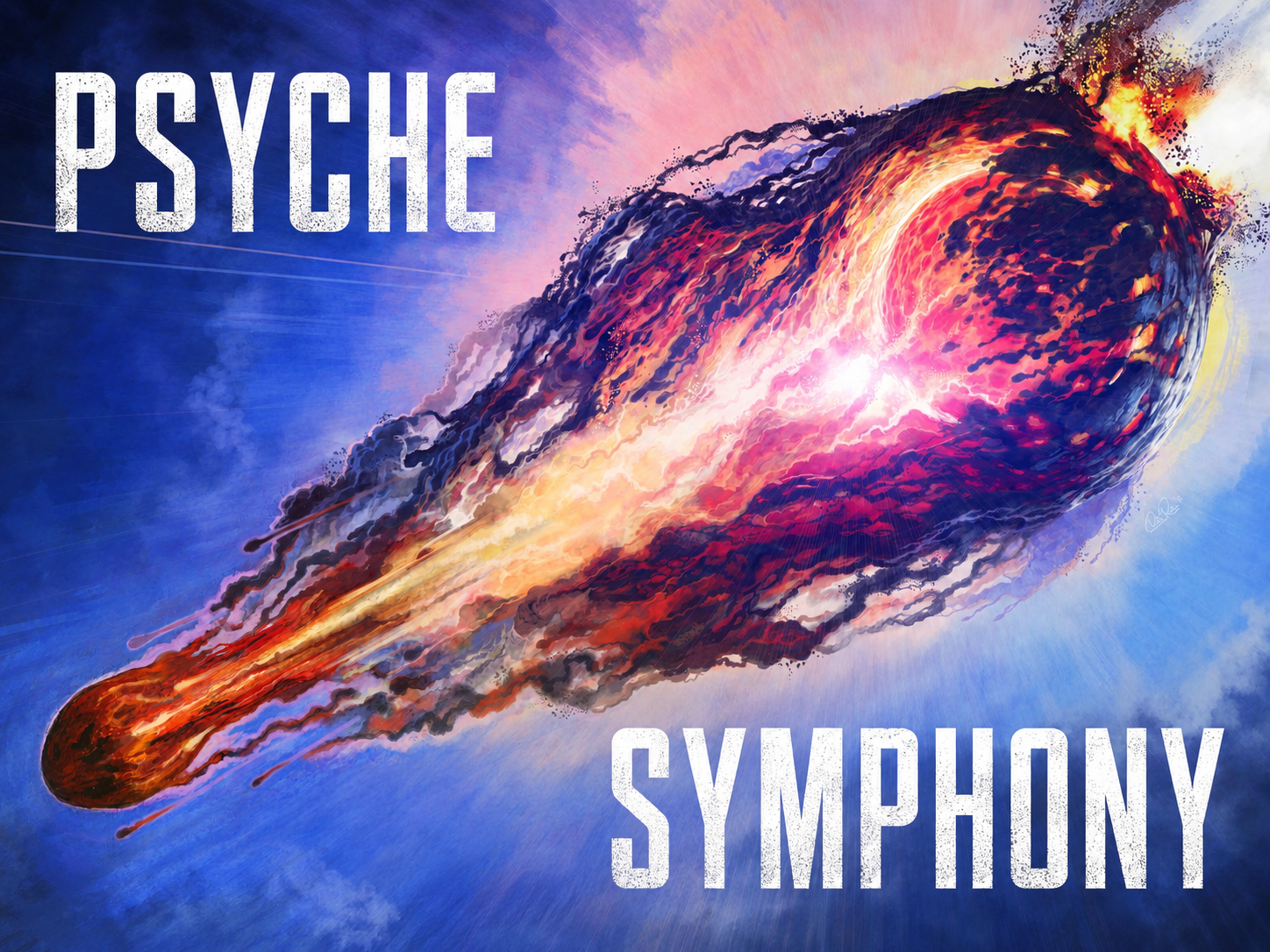
Image Credit: ASU/Peter Rubin, adapted
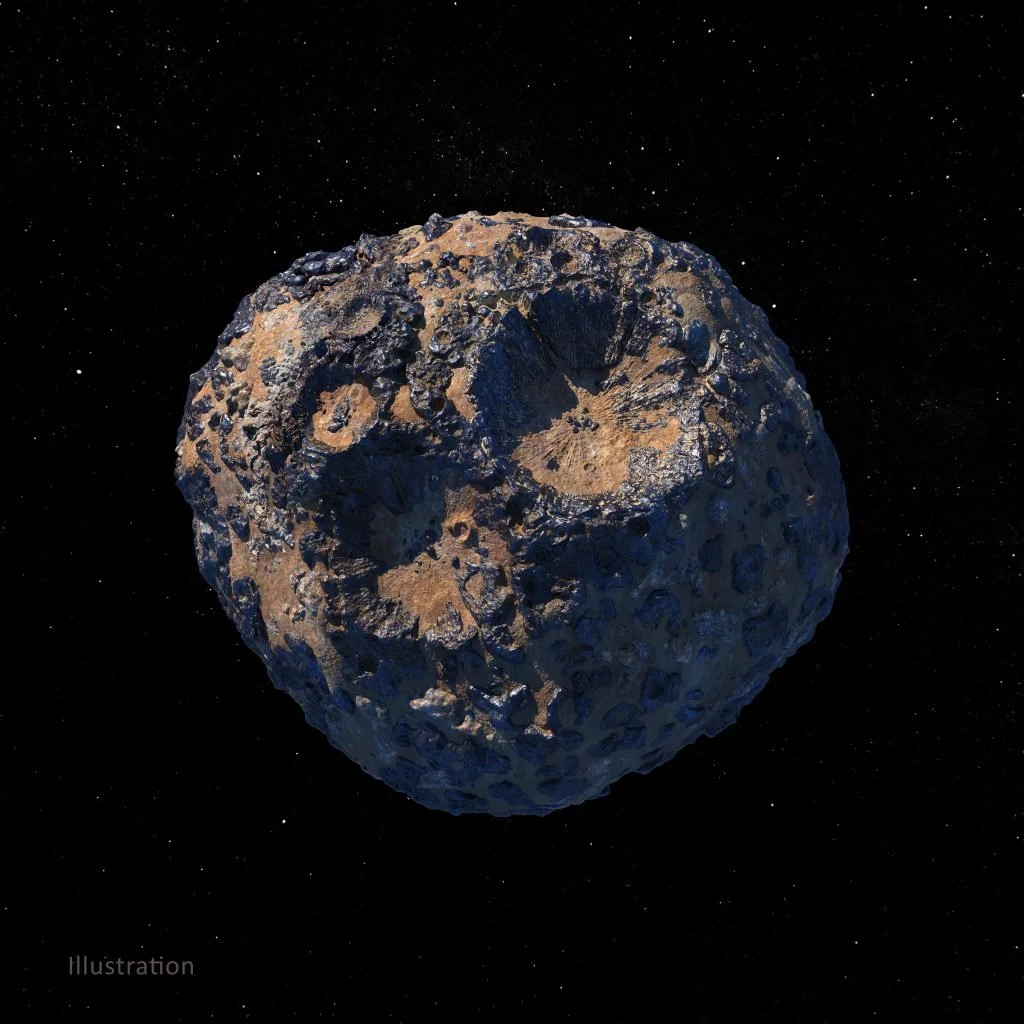
Join the musical experience that follows the journey of the NASA Space Mission on its odyssey to explore 16 Psyche, humanity’s first metal world.
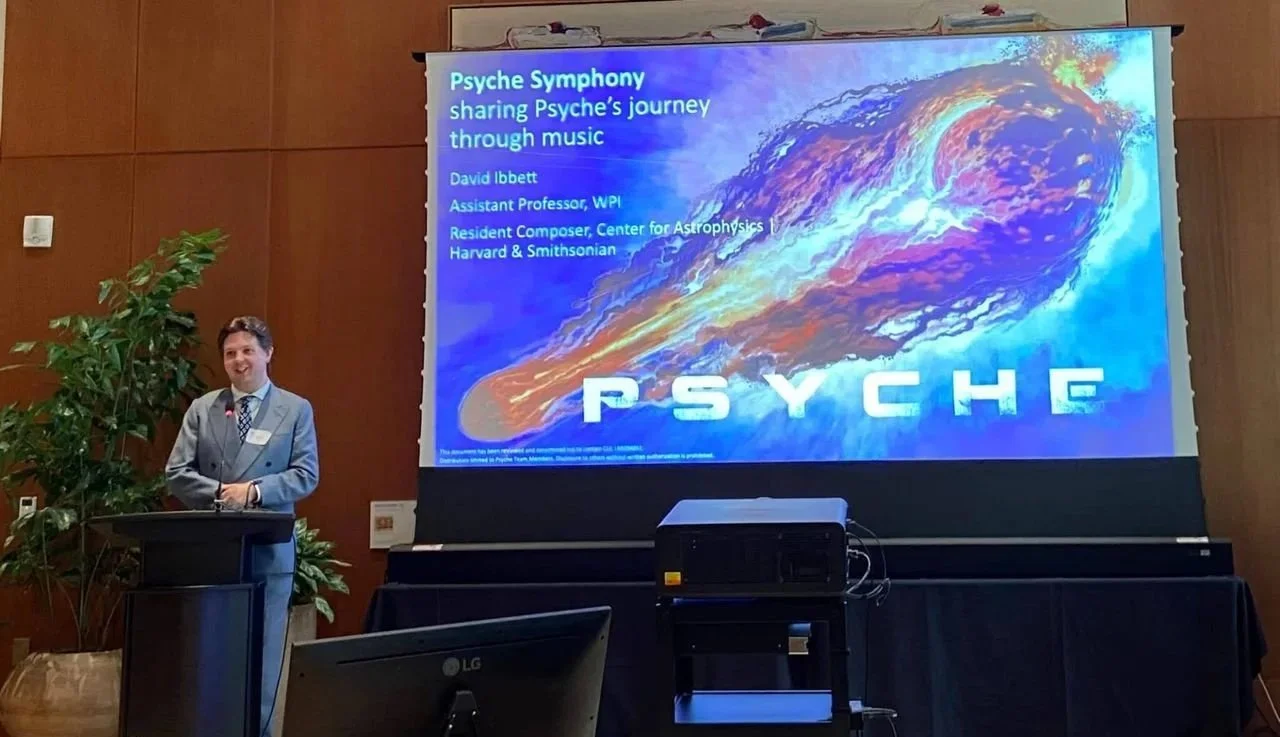
Psyche Symphony is a collaboration between planetary science and choirs worldwide, organized by Multiverse Concert Series, a nonprofit dedicated to sharing science through music. David Ibbett, the first composer invited to a NASA space conference, spoke at length with members of the Psyche science team, whose expertise and passion for the mission further inspired his work. Unfolding in stages, Psyche Symphony will premiere in 2029 as a full work for choir and orchestra, setting the poems of John Keats - with a goal of reaching 50 choirs worldwide.
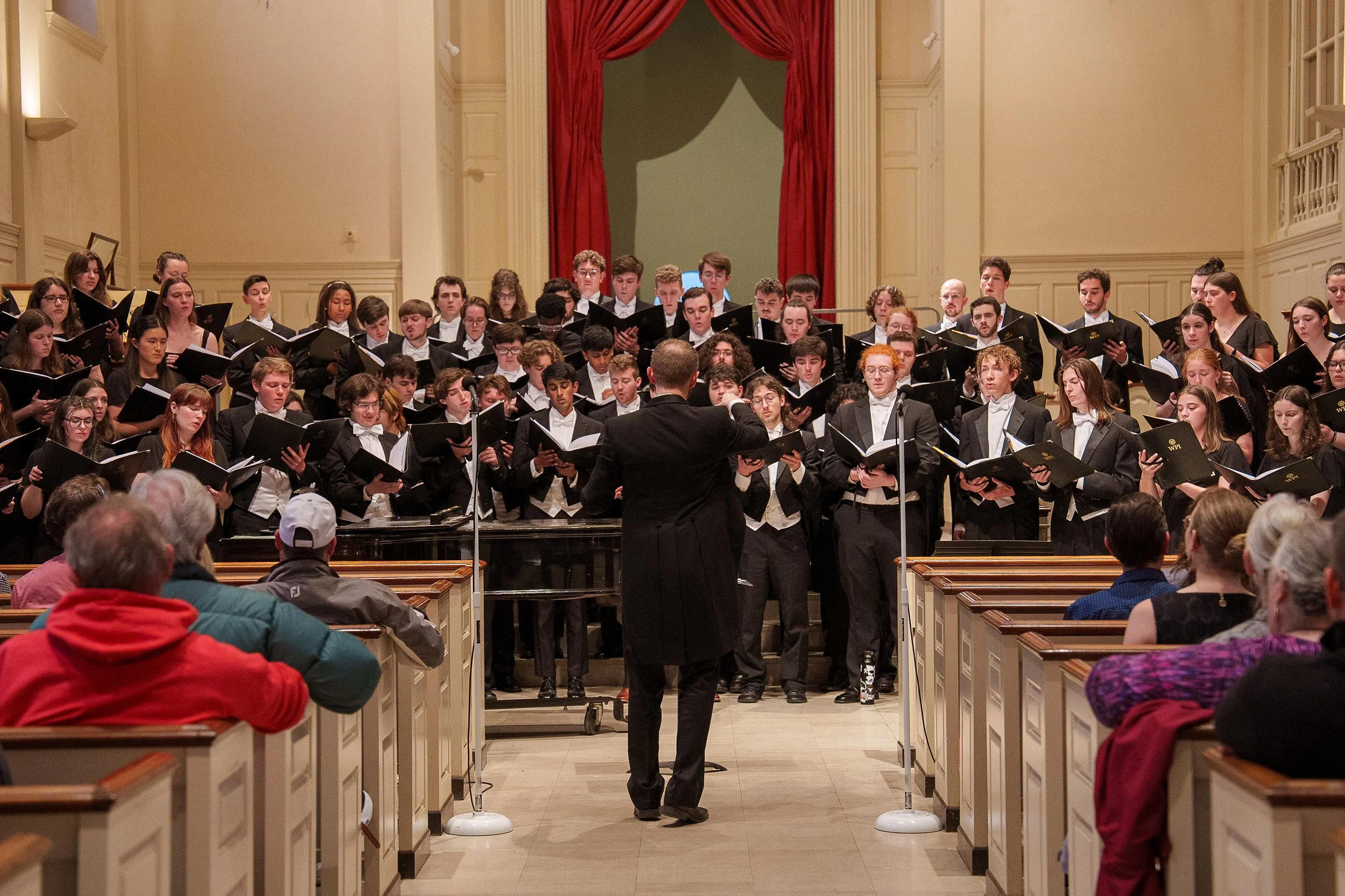
WPI Festival Chorus, Conductor Prof. Joshua Rohde
Versions for choir and orchestra, chamber orchestra and choir and piano available.
Widescreen visuals, optional.
Choirs collaborate with the composer and the science of NASA’s Psyche Space Mission.
"Beauty is truth, truth beauty—that is all
Ye know on earth, and all ye need to know."
- John Keats, “Ode on a Grecian Urn”
About The Music
Psyche Symphony is written for student, community and professional choral societies - especially those with a passion for space science - with multiple versions to suit different forces. The work sets the poetry of John Keats (1795 - 1821) - reframing the poet’s odes to discovery, nature, adventure and spirituality to shed light on the human spirit the drives us to explore and reflect upon our universe.
In the Symphony, composer David Ibbett employs data sonification - the art of translating data into sound - to reveal the complex and beautiful science that underpins the mission. Listen to the sounds of the Psyche Spacecraft’s Gamma Ray and Neutron Spectrometer (GRNS), magnetometer, and the topographical, chemical, structural, and spectral data of the asteroid itself.
With its fusion of music, poetry and research, Psyche Symphony aims to capture both the scientific and human aspects of this groundbreaking mission in an experience for anyone with a passion for discovery.
Learn about sonification in Black Hole Symphony:
Psyche Symphony Full Orchestration
Soprano Solo
Flute/picc. Solo
SATB Choir
2 Trumpets
Timpani
Drum Set
Electric Guitar
Piano
Strings
About the Composer

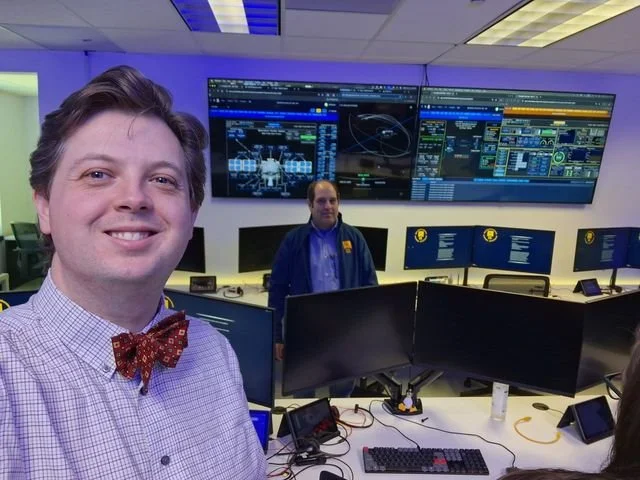
David Ibbett, Ph.D. is a composer, educator and musical advocate for science. Based in Boston, he is a Professor at WPI, directs the Multiverse Concert Series and is Resident Composer at the Center for Astrophysics | Harvard & Smithsonian. He is the first composer to drive a Mars Rover at NASA JPL.
Read about David’s work in Nature “The Sound of Stars”
David composes electrosymphonic music: a fusion of classical and electronic styles that interweaves influences from songs, symphonies, pop, rock and electronica. Musical strands are met with inspiration from the work of scientists: sonified data, musical metaphors for scientific concepts, and experimental sound and images from contemporary research.
In 2020, David was the first Guest Composer at Fermilab, the Fermi National Accelerator Laboratory, and on 2023, David was named the first Resident Composer at the Center for Astrophysics | Harvard & Smithsonian. In all projects, David seeks a deep collaboration with musicians, scientists, artists and performers. He has worked with physicists (Dr. Mathew Kleban, NYU), biologists (Dr. Paul Garrity, Brandeis), engineers (Dr. Irmgard Bischofberger, MIT), sociologists (Dr. Clara Han, Johns Hopkins), astrophysicists (Dr. Priya Natarajan, Yale) and oceanographers (Dr. Sarah Davies, BU). Recent works include Cellular Dance (2019) a ballet on a theme of cell movement with biologist Alexey Veraksa of UMass Boston, Octave of Light (2020) an album of exoplanet music, Black Hole Symphony (2022) and Mars Symphony (2024) orchestral journeys through spacetime for planetariums and orchestral performances nationwide.
He has performed science symphonies at science museums nationwide, the National Academy of Sciences, Center for Astrophysics | Harvard & Smithsonian, Fermi National Accelerator Laboratory and the NASA Jet Propulsion Lab.
David is represented by Encore Artists Management.
Psyche Symphony Intern
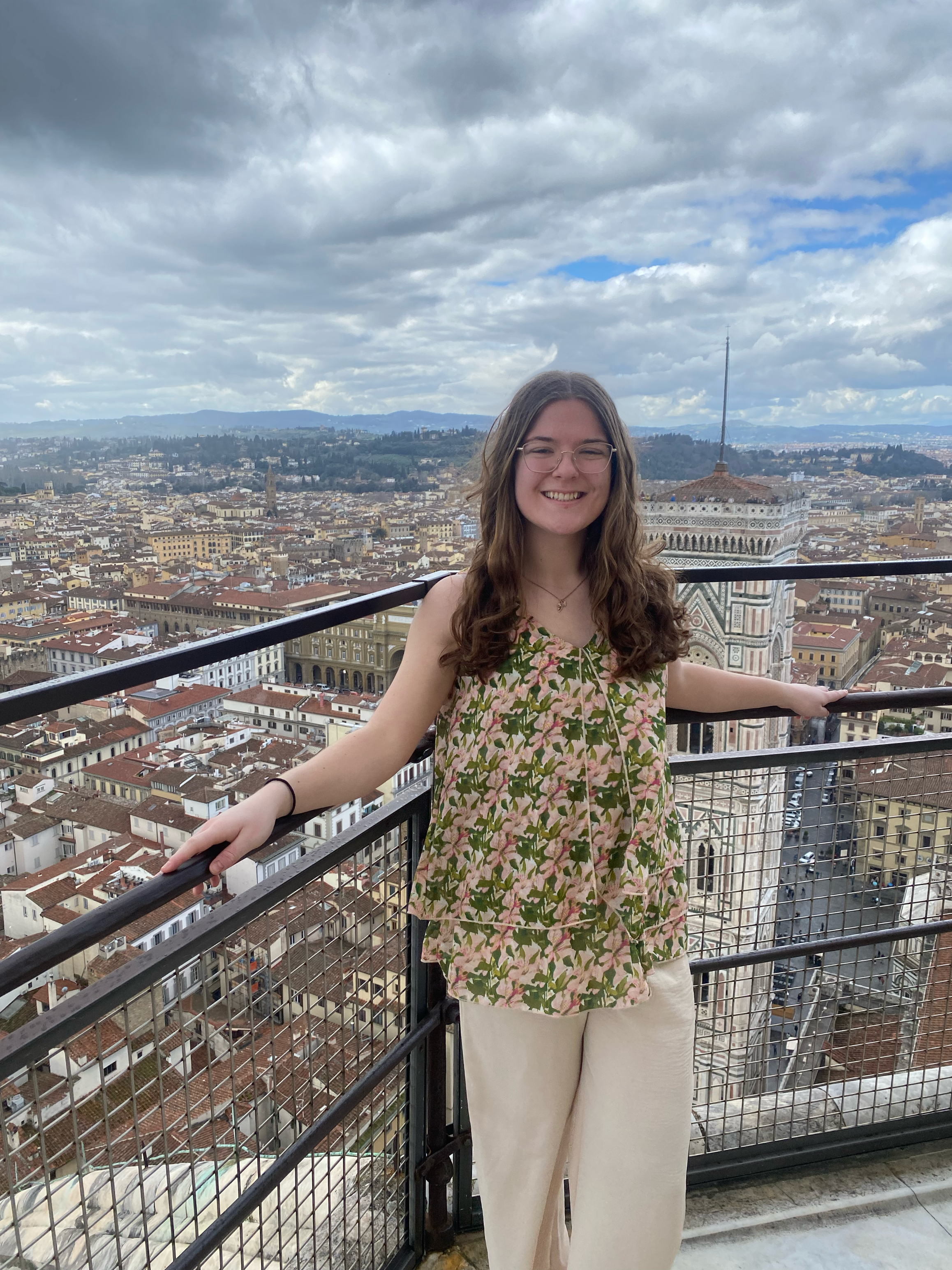
Anne-Claire Nickle is an Applied Physics major and Chemistry minor at Worcester Polytechnic Institute. She joined the Multiverse Concert Series in July 2026 to help with web design and outreach for the Psyche Symphony under the guidance of WPI professor and Multiverse director David Ibbett.
Anne-Claire’s interests include astrophysics, meteorology and astrochemistry, especially the study of black holes and extreme weather. She has research experience in active optical systems, as well as mission concept development and proposal writing skills through the NASA L’SPACE program. Alongside academics, music is her passion, and she is part of two choirs and an acapella group on campus, as well as participating in theater. She also sang in the MMEA All-State chorus in 2024. Outside of school, she works as a lifeguard and loves reading science fiction and fantasy books, writing, and drawing.




Texts by John Keats 1795-1821
I: Ode to Psyche
O brightest! though too late for antique vows,
Too, too late for the fond believing lyre,
When holy were the haunted forest boughs,
Holy the air, the water, and the fire;
Yet even in these days so far retir'd
From happy pieties, thy lucent fans,
Fluttering among the faint Olympians,
I see, and sing, by my own eyes inspir’d.
So let me be thy choir, and make a moan
Upon the midnight hours;
Thy voice, thy lute, thy pipe, thy incense sweet
From swinged censer teeming;
Thy shrine, thy grove, thy oracle, thy heat
Of pale-mouth’d prophet dreaming.
II: Song of Four Fairies
SALAMANDER
Happy, happy glowing Fire!
Dazzling bowers of soft retire,
Ever let my nourish’d wing,
Like a bat’s, still wandering,
Faintly fan your fiery spaces,
Spirit sole in deadly places.
In unhaunted roar and blaze,
Open eyes that never daze,
Let me see the myriad shapes
Of men, and beasts, and fish, and apes,
Portray’d in many a fiery den,
And wrought by spumy bitumen.
On the deep intenser roof,
Arched every way aloof,
Let me breathe upon their skies,
And anger their live tapestries;
Free from cold, and every care,
Of chilly rain, and shivering air.
ZEPHYR
Spirit of Fire! away! away!
Or your very roundelay
Will sear my plumage newly budded
From its quilled sheath, all studded
With the self-same dews that fell
On the may-grown asphodel.
Spirit of Fire — away! away!
BREAMA
Spirit of fire — away! away!
Zephyr, blue-eyed fairy, turn,
And see my cool sedge-buried urn,
Where it rests its mossy brim
’Mid water-mint and cresses dim;
And the flowers, in sweet troubles,
Lift their eyes above the bubbles,
Like our Queen, when she would please
To sleep, and Oberon will teaze.
Love me, blue-eyed fairy true,
Soothly I am sick for you.
III: When I have Fears
When I have fears that I may cease to be
Before my pen has gleaned my teeming brain,
Before high-pilèd books, in charactery,
Hold like rich garners the full ripened grain;
When I behold, upon the night’s starred face,
Huge cloudy symbols of a high romance,
And think that I may never live to trace
Their shadows with the magic hand of chance;
And when I feel, fair creature of an hour,
That I shall never look upon thee more,
Never have relish in the faery power
Of unreflecting love—then on the shore
Of the wide world I stand alone, and think
Till love and fame to nothingness do sink.
IV: What the Thrush Said
O Thou whose face hath felt the Winter’s wind,
Whose eye has seen the snow-clouds hung in mist,
And the black elm tops ’mong the freezing stars,
To thee the spring will be a harvest-time.
O thou, whose only book has been the light
Of supreme darkness which thou feddest on
Night after night when Phœbus was away,
To thee the Spring shall be a triple morn.
O fret not after knowledge—I have none,
And yet my song comes native with the warmth.
O fret not after knowledge—I have none,
And yet the Evening listens. He who saddens
At thought of idleness cannot be idle,
And he’s awake who thinks himself asleep.
V: Sonnet. Written Upon The Top Of Ben Nevis
Read me a lesson, Muse, and speak it loud
Upon the top of Nevis, blind in mist!
I look into the chasms, and a shroud
Vapurous doth hide them - just so much I wist
Mankind do know of hell; I look o'erhead,
And there is sullen mist, - even so much
Mankind can tell of heaven; mist is spread
Before the earth, beneath me, - even such,
Even so vague is man's sight of himself!
Here are the craggy stones beneath my feet, -
Thus much I know that, a poor witless elf,
I tread on them, - that all my eye doth meet
Is mist and crag, not only on this height,
But in the world of thought and mental might!
VI: Ode on a Grecian Urn
Thou still unravish'd bride of quietness,
Thou foster-child of silence and slow time,
Sylvan historian, who canst thus express
A flowery tale more sweetly than our rhyme:
What leaf-fring'd legend haunts about thy shape
Of deities or mortals, or of both,
In Tempe or the dales of Arcady?
What men or gods are these? What maidens loth?
What mad pursuit? What struggle to escape?
What pipes and timbrels? What wild ecstasy?
Heard melodies are sweet, but those unheard
Are sweeter; therefore, ye soft pipes, play on;
Not to the sensual ear, but, more endear'd,
Pipe to the spirit ditties of no tone:
Fair youth, beneath the trees, thou canst not leave
Thy song, nor ever can those trees be bare;
Bold Lover, never, never canst thou kiss,
Though winning near the goal yet, do not grieve;
She cannot fade, though thou hast not thy bliss,
For ever wilt thou love, and she be fair!
Ah, happy, happy boughs! that cannot shed
Your leaves, nor ever bid the Spring adieu;
And, happy melodist, unwearied,
For ever piping songs for ever new;
More happy love! more happy, happy love!
For ever warm and still to be enjoy'd,
For ever panting, and for ever young;
All breathing human passion far above,
That leaves a heart high-sorrowful and cloy'd,
A burning forehead, and a parching tongue.
Who are these coming to the sacrifice?
To what green altar, O mysterious priest,
Lead'st thou that heifer lowing at the skies,
And all her silken flanks with garlands drest?
What little town by river or sea shore,
Or mountain-built with peaceful citadel,
Is emptied of this folk, this pious morn?
And, little town, thy streets for evermore
Will silent be; and not a soul to tell
Why thou art desolate, can e'er return.
O Attic shape! Fair attitude! with brede
Of marble men and maidens overwrought,
With forest branches and the trodden weed;
Thou, silent form, dost tease us out of thought
As doth eternity: Cold Pastoral!
When old age shall this generation waste,
Thou shalt remain, in midst of other woe
Than ours, a friend to man, to whom thou say'st,
"Beauty is truth, truth beauty,—that is all
Ye know on earth, and all ye need to know."
VII: O that a week could be an age
O that a week could be an age, and we
Felt parting and warm meeting every week;
Then one poor year a thousand years would be,
The flush of welcome ever on the cheek:
So could we live long life in little space,
So time itself would be annihilate,
So a day's journey in oblivious haze
To serve our joys would lengthen and dilate.
O to arrive each Monday morn from Ind!
To land each Tuesday from the rich Levant!
In little time a host of joys to bind,
And keep our souls in one eternal pant!
This morn, my friend, and yester-evening taught
Me how to harbor such a happy thought.
VIII: from Endymion
A thing of beauty is a joy for ever:
Its loveliness increases; it will never
Pass into nothingness; but still will keep
A bower quiet for us, and a sleep
Full of sweet dreams, and health, and quiet breathing.
Therefore, on every morrow, are we wreathing
A flowery band to bind us to the earth,
Spite of despondence, of the inhuman dearth
Of noble natures, of the gloomy days,
Of all the unhealthy and o'er-darkened ways
Made for our searching: yes, in spite of all,
Some shape of beauty moves away the pall
From our dark spirits. Such the sun, the moon,
Trees old and young, sprouting a shady boon
For simple sheep; and such are daffodils
With the green world they live in; and clear rills
That for themselves a cooling covert make
'Gainst the hot season; the mid forest brake,
Rich with a sprinkling of fair musk-rose blooms:
And such too is the grandeur of the dooms
We have imagined for the mighty dead;
All lovely tales that we have heard or read:
An endless fountain of immortal drink,
Pouring unto us from the heaven's brink.
Nor do we merely feel these essences
For one short hour; no, even as the trees
That whisper round a temple become soon
Dear as the temple's self, so does the moon,
The passion poesy, glories infinite,
Haunt us till they become a cheering light
Unto our souls, and bound to us so fast,
That, whether there be shine, or gloom o'ercast;
They always must be with us, or we die.
IV: Bright Star
Bright star, would I were stedfast as thou art—
Not in lone splendour hung aloft the night
And watching, with eternal lids apart,
Like nature's patient, sleepless Eremite,
The moving waters at their priestlike task
Of pure ablution round earth's human shores,
Or gazing on the new soft-fallen mask
Of snow upon the mountains and the moors—
No—yet still stedfast, still unchangeable,
Pillow'd upon my fair love's ripening breast,
To feel for ever its soft fall and swell,
Awake for ever in a sweet unrest,
Still, still to hear her tender-taken breath,
And so live ever—or else swoon to death.